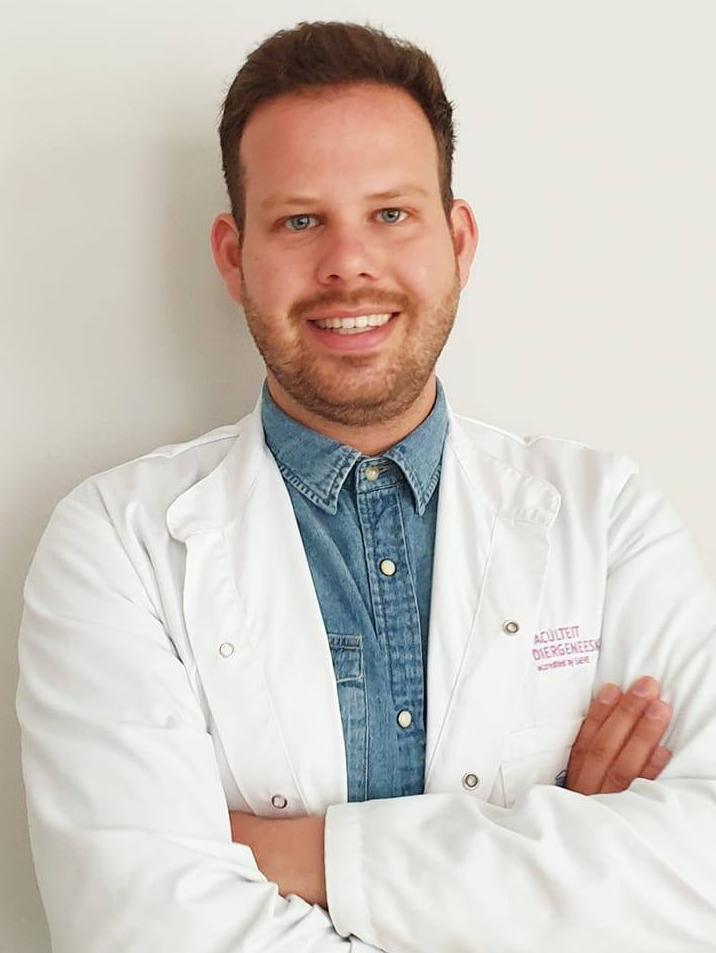
Niels Vander Elst
Karolinska Institutet
Department of Neuroscience
My journey with bacteriophage-derived endolysins began during an internship at Stockholm University and has since evolved into a personal and professional mission to translate this technology into real-world clinical and veterinary solutions. My research focuses on Gram-positive pathogens, particularly Streptococcus and Staphylococcus species, with publications in international journals such as Microbial Biotechnology and Molecular Medicine, invited and selected talks in Sweden and abroad, and multiple patent applications. One of my patented endolysins is advancing toward clinical trials for a veterinary application, while another was a finalist for the University of Maryland’s ‘Invention of the Year’ award in 2020. I have secured competitive research funding across Europe and the U.S., including a prestigious fellowship from the Belgian American Educational Foundation (BAEF), which supported my work at the Institute for Bioscience and Biotechnology Research, University of Maryland (Prof. Daniel C. Nelson). I later earned a dual PhD in Biotechnology and Veterinary Medicine from Ghent University (Prof. Yves Briers; Prof. Evelyne Meyer) and KU Leuven (Prof. Rob Lavigne), funded by the Research Foundation Flanders (FWO). In 2023, I was awarded a major grant from Kronprinsessan Lovisas Förening för Barnasjukvård / Stiftelsen Axel Tielmans Minnesfond, which was renewed in 2025 with a total amount exceeding 1 million SEK, to apply the endolysin technology to central nervous system infections in children, specifically pneumococcal meningoencephalitis. Currently, I am a postdoctoral researcher at Karolinska Institutet, where I engineer next-generation endolysins to address key translational challenges for this application. As such, my work focuses on mitigating antigen release during bacterial lysis, optimizing dosing strategies, and developing synergistic combinations with existing antibiotics. A recent study I authored demonstrated that endolysins can resensitize β-lactam- and macrolide-resistant Streptococcus pneumoniae, receiving widespread media coverage and ranking in the top 5% of all research outputs tracked by Altmetric. This work was also recognized with an award at the 2024 Encephalitis International meeting in London. In addition to my research, I was nominated and subsequently elected as part of the Leadership of the Junior Faculty at Karolinska Institutet, where I work to foster an inclusive and dynamic academic environment. I sit on the board of the Open Science Working Group at KI, and contribute to the KI medical curriculum by teaching neurohistology.
Affiliations: (1). Karolinska Institutet, Stockholm (Sweden) (2). European Institute for Molecular Imaging, Universitätsklinikum Münster (Germany)
Streptococcus pneumoniae causes serious infections worldwide, including bacteremia, pneumonia, and meningitis, with the latter often leading to long-term neurological damage. Rising resistance to key antibiotics such as β-lactams and macrolides underscores the urgent need for novel therapies. This study investigates the bacteriophage-derived endolysin Cpl-1 as a potential adjunct to antibiotic treatment. Cpl-1 was tested in human blood and cerebrospinal fluid (CSF) against multidrug-resistant clinical strains, showing potent bactericidal activity. When combined with penicillin or erythromycin, Cpl-1 displayed synergistic or additive effects, restoring antibiotic efficacy. In differentiated SH-SY5Y human neuronal cells infected with pneumococci, these combinations significantly reduced bacterial load and protected neurons from cytotoxic damage. Using a transwell system with human endothelial cells, Cpl-1 demonstrated the ability to cross the blood-brain barrier, a finding corroborated in a mouse model of bacteremia-derived meningitis. Systemic Cpl-1 treatment, particularly in combination with penicillin, cleared bacteria from the brain, improved survival, and prevented disease symptoms. These results highlight Cpl-1 as a promising adjunctive therapy that enhances antibiotic performance, combats resistant pneumococcal strains, and effectively treats meningitis. For press release, see: https://news.ki.se/researchers-restore-antibiotic-effect-in-the-event-of-resistance.