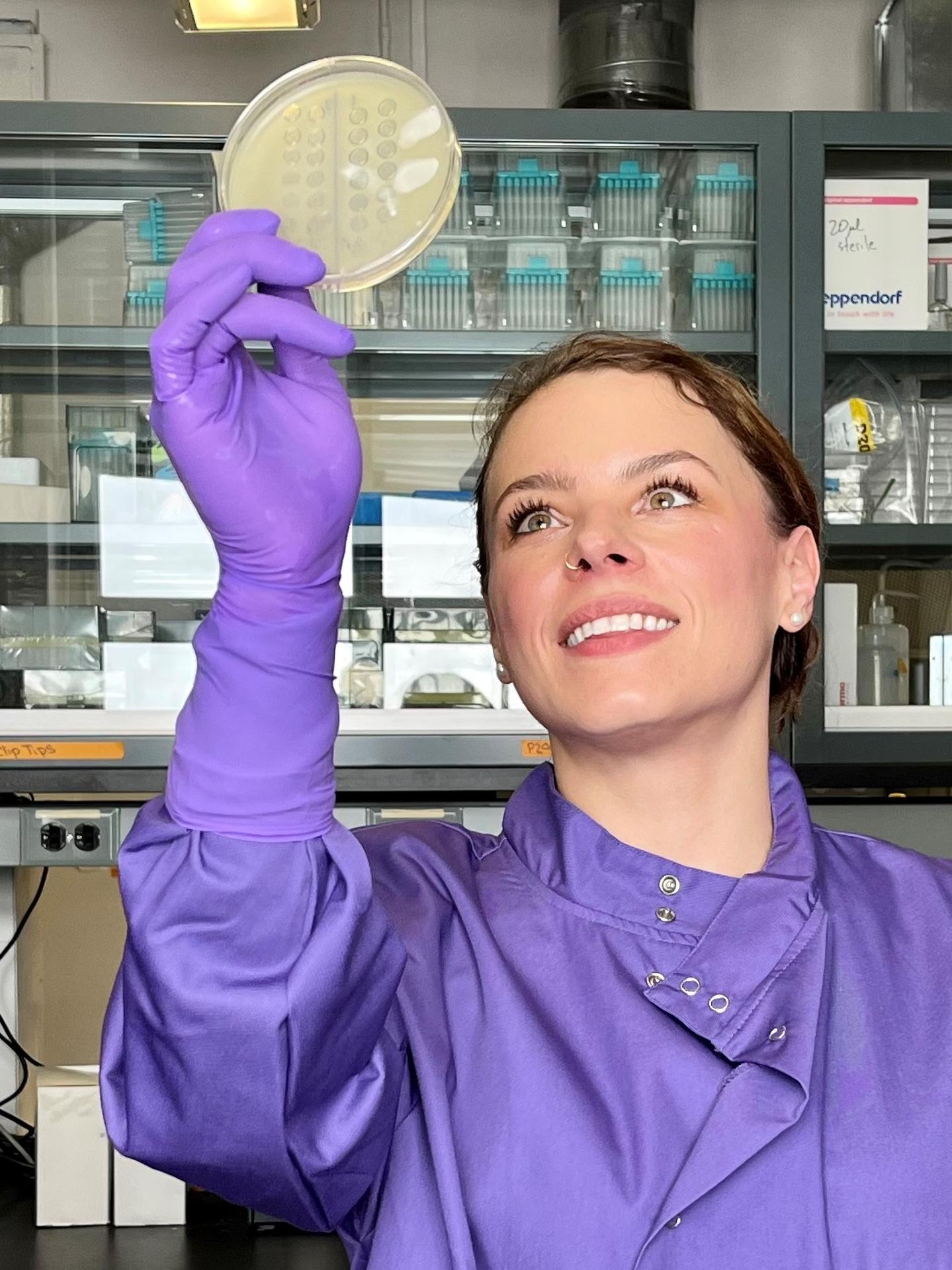
Danielle Peters
National Research Council of Canada
Infectious Disease Team
Dr. Danielle Peters is a Research Officer at the Human Health Therapeutics Research Centre at the National Research Council of Canada (NRC) in Ottawa. She earned her Ph.D. in Microbiology and Biotechnology from the University of Alberta in 2019, where she focused on bacteriophages targeting antimicrobial-resistant pathogens infecting Cystic Fibrosis patients. She completed her postdoctoral training at the University of Ottawa, investigating how the human gut microbiome responds to food additives and phage perturbations using metaproteomics. Since joining the NRC in 2021, Dr. Peters has led research programs focused on the development and optimization of phage-based therapeutics for multidrug-resistant bacterial infections. She has trained multiple students and technical staff, published several peer-reviewed articles, and helped secure over $5.5 million in research funding. Her collaborative work includes participation in a Canada–UK Biomanufacturing Consortium grant focused on phage therapeutics. In addition to her research role, Dr. Peters serves as Vice President of Phage Canada, a non-profit organization working to advance phage-based solutions and foster collaboration across the Canadian phage community.
Affiliations: (1). Human Health Therapeutics (HHT), National Research Council of Canada, Ottawa, Ontario (Canada) (2). Department of Biology, Brock University, St. Catharines, Ontario (Canada)
The Gram-negative opportunistic pathogen, Acinetobacter baumannii, is categorized as a priority one pathogen by the World Health Organization due to intrinsic antibiotic resistance and virulence factors. The bacterium is protected by a thick capsule polysaccharide (CPS) layer of diverse sugars that shields it from immune defenses, antibiotics, and bacteriophages. Specialized phages have evolved mechanisms to circumvent this barrier by encoding depolymerases in their tail appendages to degrade CPS and access bacterial receptors. In this novel study, we leveraged a panel of seven lytic phages from Ottawa, Canada, alongside six recombinant depolymerases, to broaden the panel host range without genetic engineering. A synergy assay demonstrated that combining varying concentrations (0.8 – 50 ng/mL) of depolymerases with 102 – 108 PFU/mL phages significantly inhibited the growth of multiple A. baumannii strains, outperforming high doses of phage or depolymerase alone. Area under the curve analysis showed up to 85% growth inhibition compared to controls. Remarkably, phage-depolymerase combinations achieved up to six-log increases in endpoint titre, offering a cost-effective solution to phage propagation challenges. Efficiency of plating studies further confirmed expanded host ranges in the presence of depolymerases, facilitating broader therapeutic applications without genetic engineering. Preparations for murine models are underway to study combined phage-depolymerase treatment in vivo. These findings highlight the transformative potential of phage-derived depolymerases across research, therapeutic, and industrial applications, paving the way to enhanced phage therapeutics with improved host ranges.